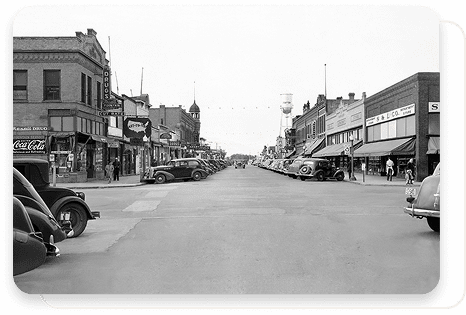
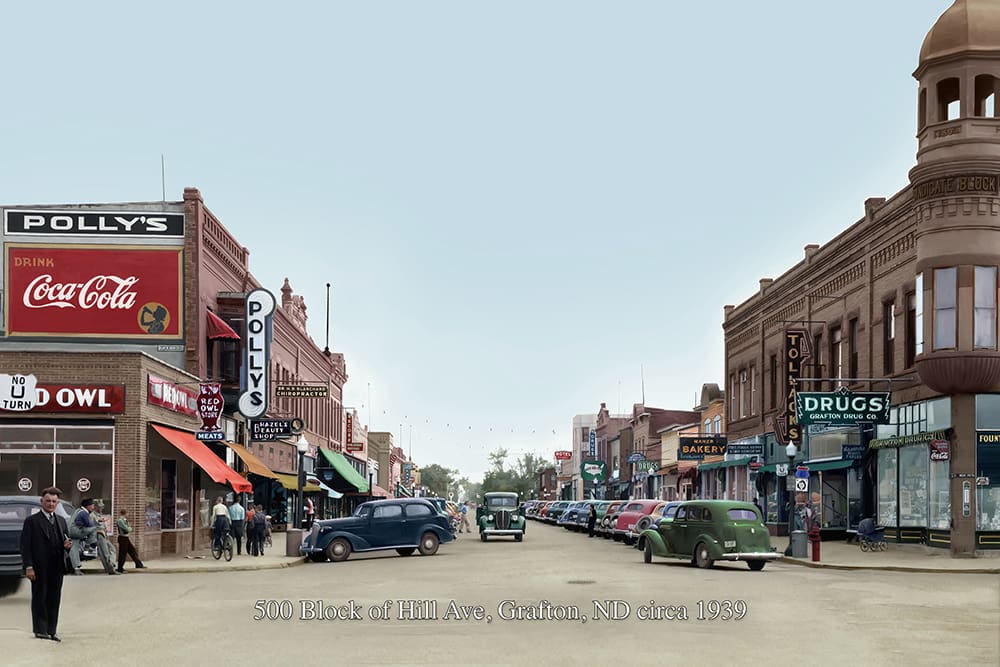
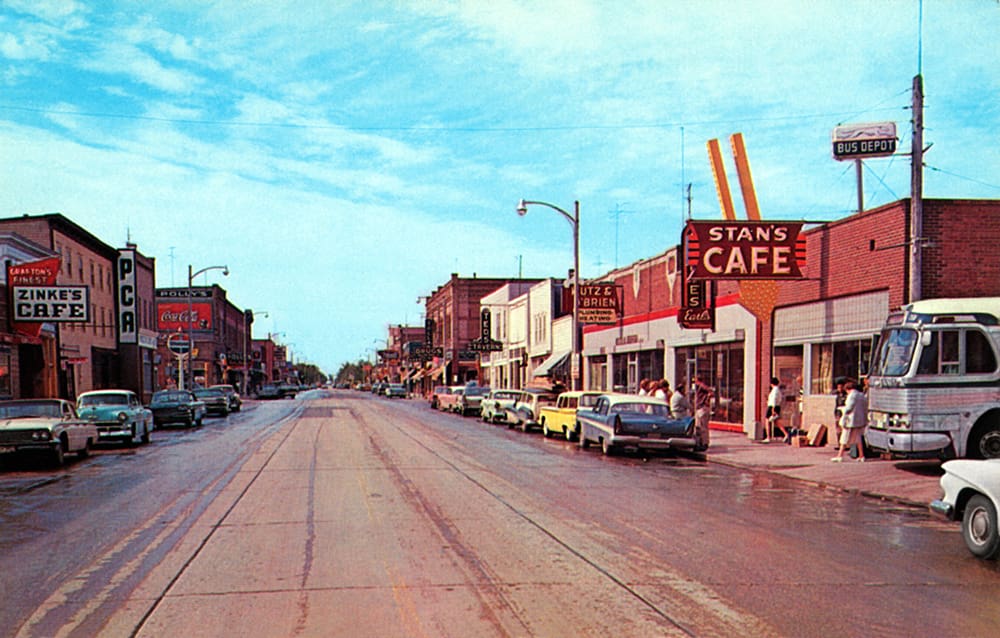
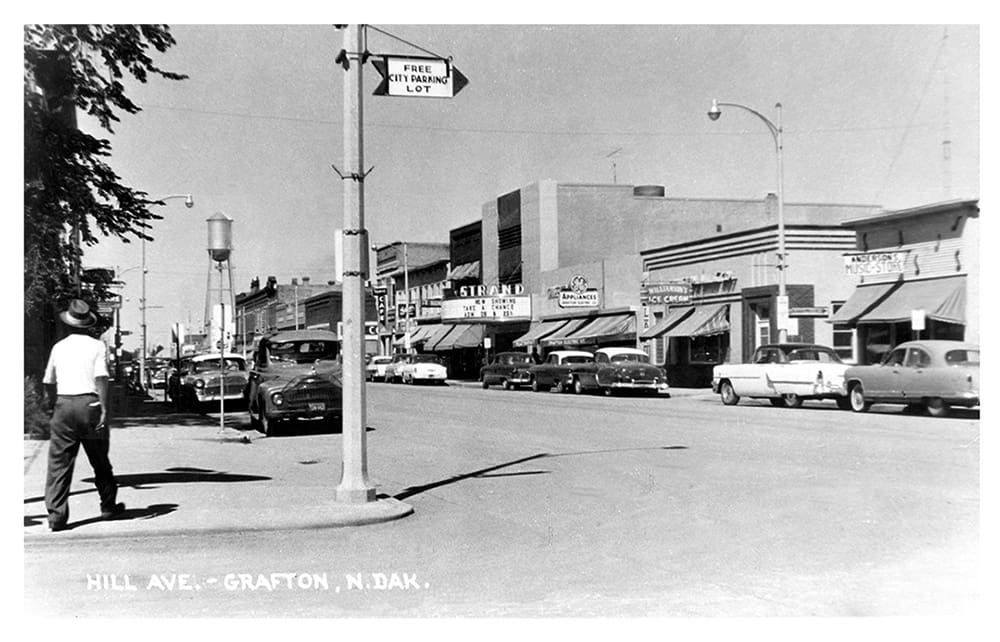
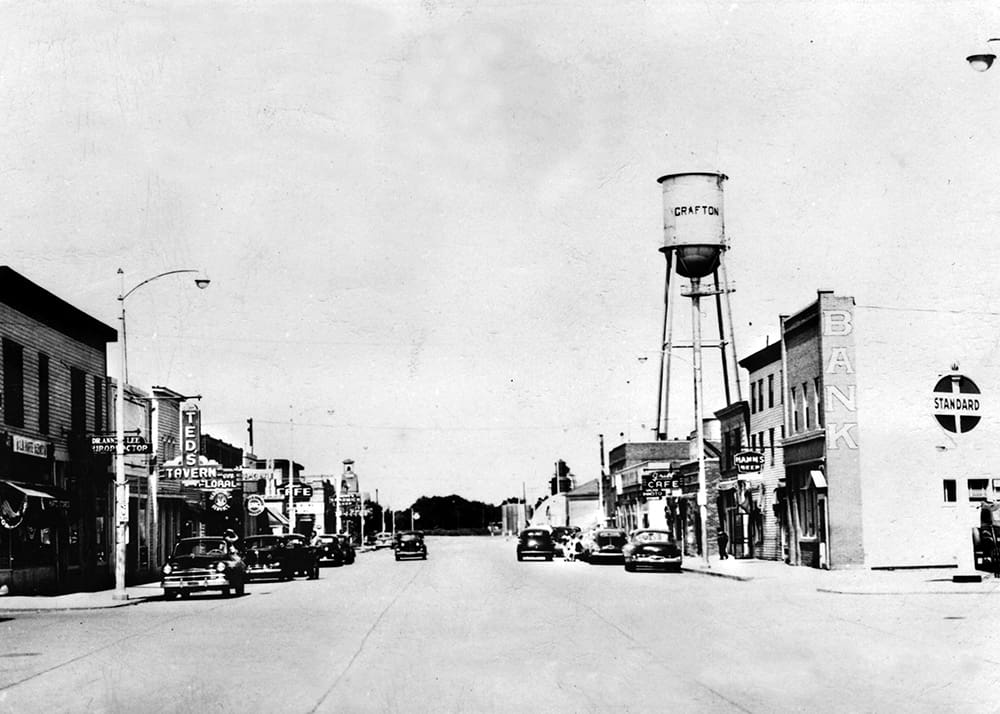
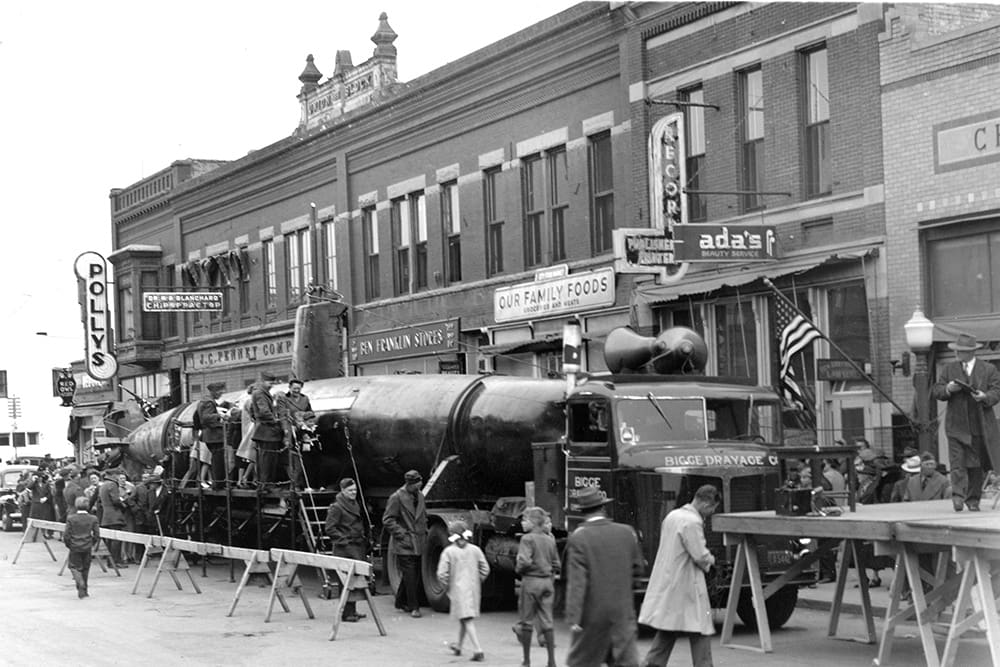
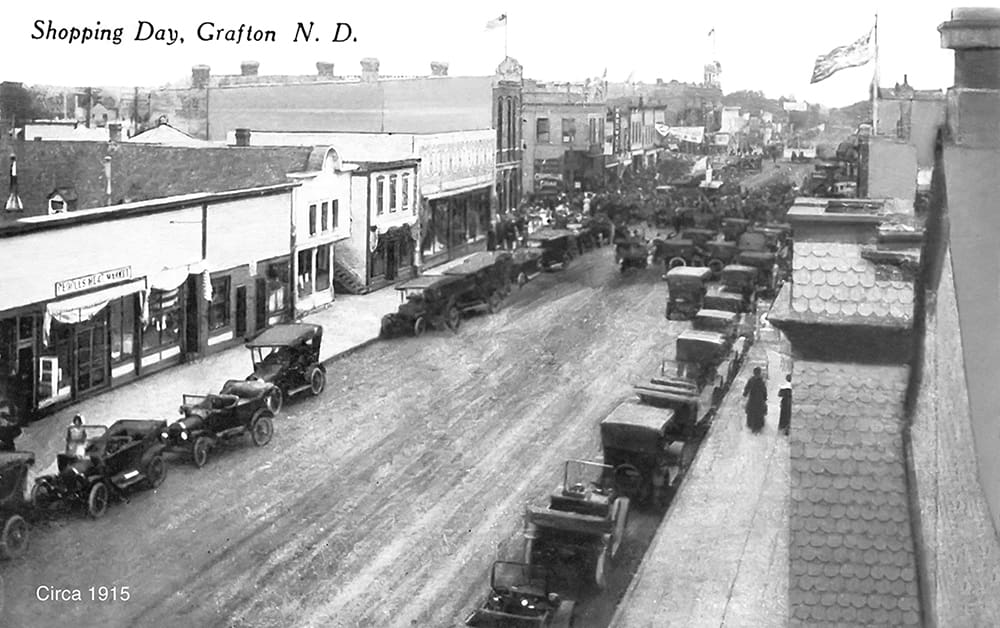
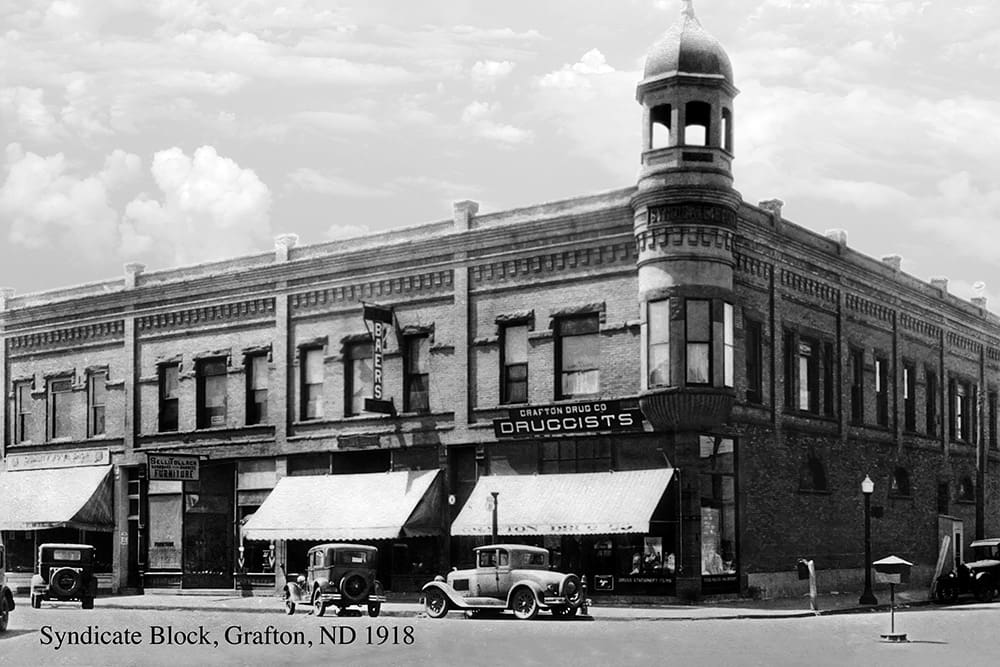
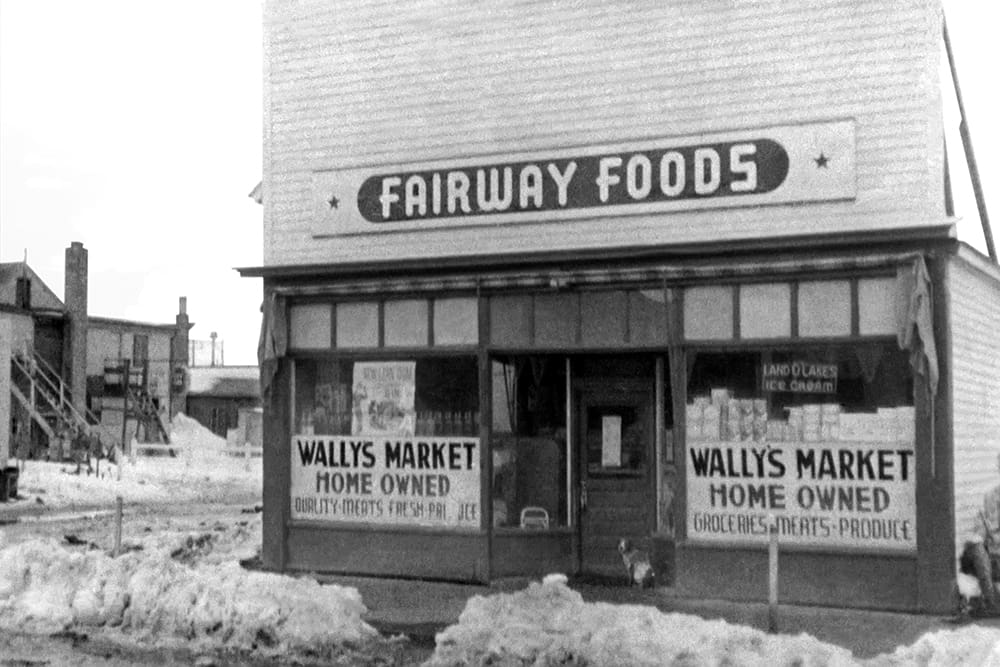
Grafton is 12 miles west from the Red River of the North and on the border of its tributary, the Park River. Grafton is the county seat of Walsh County and the center of the far famed Red River Valley. The soil of the valley is a rich black loam, varying in depth from eighteen inches to three feet, and rests upon very deep clay subsoil.
Settlement began in the spring of 1878 when O.T. Gorder and M. Christianson located on the north side of Park River. In April of 1878, the area was visited by Thomas E. Cooper and family, who took up permanent residence in 1879. In the fall of 1878, Nils Monson walked from Winnipeg with four companions to acquire homesteads, and on New Year’s Eve 1878, Gust Colsen arrived.
Portions of the homesteads of these three early settlers formed the original townsite of Grafton. Wood and water were considered essential to these early homesteaders. The timber along the borders of the river furnished lumber and fuel, the water was handy for watering stock, washing, fishing, or even as a means of transportation.
In 1879, Thomas Cooper built the first structure on the Grafton site, named the town after the county in New Hampshire where his wife’s parents were from, and secured the first post office for the area after traveling many miles through the snow to obtain the signatures of the settlers in the area.
The first pioneer businesses were located on the south bank of the river. These included the first hotel built by Cooper, a little store operated by Bert Beer, a blacksmith shop opened by John Volk, a grocery store established by N.J. Roholt, and a general store operated by Stewart Cairncross.
The railroad was a very important factor in the growth of the town. The Great Northern Railroad was the first to reach Grafton in December of 1881. Credit must also be given to the sturdy pioneers who braved life on the frontier to plow the first acres and bring prosperity to the region.
Grafton was founded as a “Town” in 1882. On May 22, 1882, an election was held to determine if the Town of Grafton should be incorporated, with 78 ballots cast – 74 for incorporation and 4 against. Later in June, the County Commissioners met and approved the election results and the incorporation of Grafton.
When the first train arrived in Grafton in December 1881, the population was about 400. Six months later, it had increased to 1,000. Within another six months, there were 1,500 people in Grafton. Grafton’s charter as a city was authorized by the territorial legislature and approved at the charter election held in the town of Grafton on April 3, 1883. At this election, Stewart Carincross was elected Grafton’s first mayor.
For more information, please check out Grafton – A 100 Year Look at Grafton, North Dakota by the Centennial Book Committee of 1982, which is a compilation of articles and pictures.